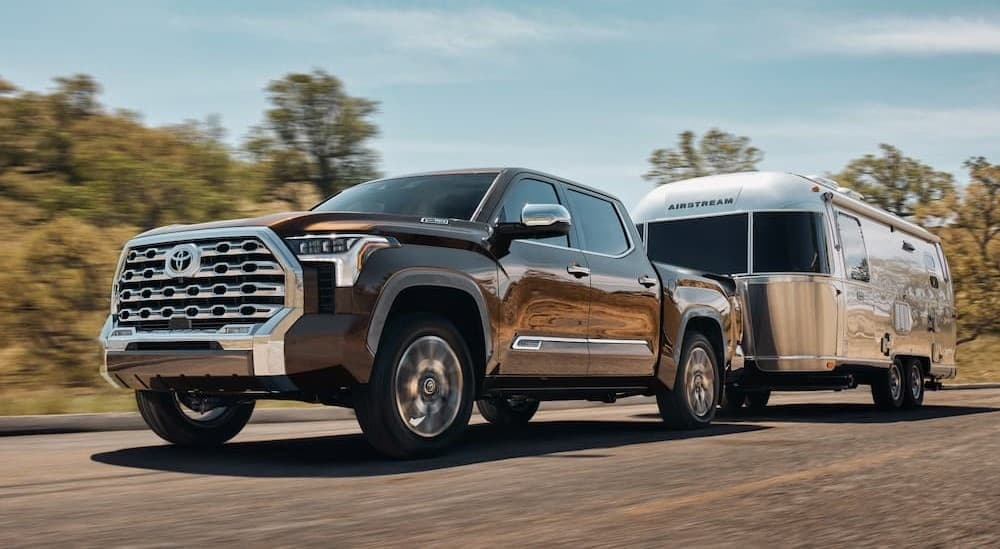
Finding the right full-size pickup truck requires clear facts and an understanding of what comes standard from the factory. In today's highly competitive automotive landscape, truck buyers demand more than just a bed and a steering wheel; they expect a mobile workspace, a family hauler, and a dependable workhorse all rolled into one.
When looking at the 2026 Toyota Tundra vs 2026 Chevy Silverado 1500, the differences in base equipment quickly become apparent. Toyota built its latest truck to offer premium power and utility without forcing buyers into expensive package upgrades. Our team at Toyota of Bowling Green put together this guide to show exactly why the Toyota pickup outpaces the competition.
Base Model Capability and Standard Tech
The Tundra's entry-level trim is the SR, which provides more standard horsepower than the TurboMax engine found in the 2026 Chevy Silverado 1500. Toyota includes features like a Smart Key System with remote start on every Tundra trim. The inclusion of remote start is a game-changer that Chevy misses out on in its base WT trim, which offers it only as an available feature.
When you are walking out to your truck with hands full of heavy tools, lumber, or even groceries, fumbling for keys is the last thing you want to do. The Tundra's proximity key lets you keep the fob safely in your pocket or tool belt, allowing you to start the engine with a quick press of a button.
Many of these conveniences require purchasing a separate package or stepping up to a mid-range trim in the Silverado lineup, which increases the total cost of ownership. Choosing the Toyota option gives buyers access to higher levels of performance and technology at the starting price point.
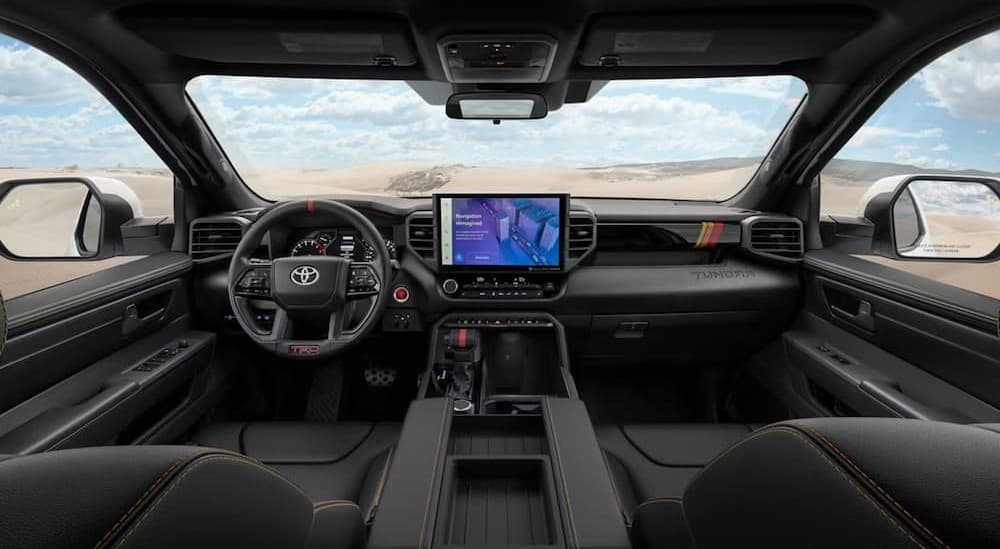
Stepping inside the cabin reveals another area where Toyota refuses to cut corners. The 2026 Tundra features a standard 8-inch touchscreen infotainment display, giving it an advantage over the Chevy Silverado 1500's standard 7-inch screen.
Powertrain Superiority Right Out of the Gate
Toyota equips the base Tundra SR with an i-FORCE 3.4L Twin-Turbo V6 engine that generates 358 hp. The Chevy Silverado WT is powered by a 2.7L TurboMax four-cylinder engine that produces 310 hp. That 48 hp gap makes a noticeable difference when merging onto the highway or hauling heavy payloads across town.
Drivers who want a true V6 truck experience get exactly that with the Tundra, bypassing the compromised feel of a four-cylinder engine.
Fewer Stops at the Fuel Pump
Stopping for gas interrupts the flow of a busy workday or a weekend trip. Toyota addresses this by offering a standard 32.2-gallon fuel tank on the Tundra lineup, which holds more fuel than the standard tank on the Chevy Silverado 1500. This larger capacity translates directly to fewer trips to the pump and a longer overall driving range. Drivers can cover more miles across Kentucky highways and stay on schedule with fewer interruptions.
Transmission and Power Delivery
Power means very little if the truck cannot deliver it smoothly to the wheels. The 2026 Toyota Tundra features a 10-speed electronically controlled automatic transmission across all trim levels. Chevrolet pairs its base TurboMax engine with an 8-speed transmission design.
The two extra gears in the Toyota provide better towing and highway-cruising performance. Having 10 speeds ensures the Tundra's engine always performs optimally, eliminating the clumsy "gear hunting" that often plagues trucks with fewer gears when climbing steep grades or pulling heavy loads.
Advanced Suspension for Better Handling
Traditional trucks often ride rough when the bed is empty. Toyota solved this by giving the Tundra a coil-spring rear suspension instead of the standard leaf springs found on the Silverado 1500. This design improves on-road comfort during daily commutes around Bowling Green. It also maintains stability and control when towing loads at highway speeds.
Bed Construction and Worksite Durability
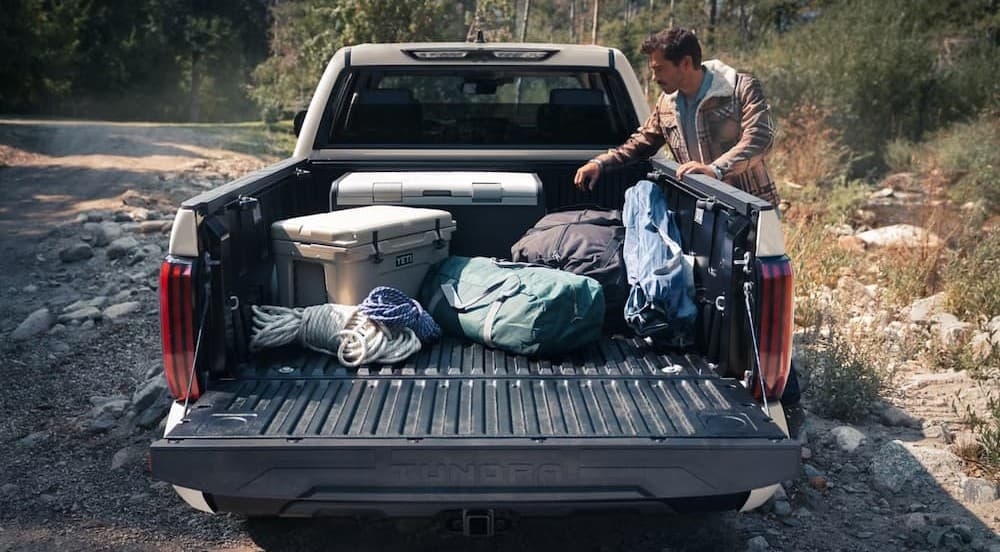
The truck bed takes the most abuse during the lifespan of a pickup. The 2026 Tundra utilizes an aluminum-reinforced composite bed that resists rust and dents. The Silverado 1500's "Durabed" uses a traditional steel roll-formed bed, which is susceptible to corrosion over time once the paint scratches. A composite bed costs less to maintain, remains structurally sound, and looks newer for longer. You can drop cinder blocks, gravel, and heavy toolboxes into the back of a Tundra without the anxiety of exposing bare metal to the harsh elements.
Standard Safety Systems
Safety should never be treated as an optional upgrade on a family vehicle or work truck. Toyota Safety Sense 2.5 comes standard on every Tundra, providing full-speed range dynamic radar cruise control and a pre-collision system with pedestrian detection. The Silverado offers a safety suite, but advanced adaptive cruise control is often an extra cost on lower trims. Toyota ensures every driver gets top-tier collision-prevention technology, regardless of budget.
Comparing the Off-Road Potential
Many drivers take their trucks off the pavement for recreation or work. The Tundra offers exceptional ground clearance and approach angles right out of the factory. The 2026 Tundra SR trim has an impressive ground clearance of 9.3 inches, while the Silverado WT has only 7.9 inches. If higher ground clearance is important to you, Toyota doesn't force you to step up to a higher trim level to get it.
This additional ground clearance provides clear practical advantages, even if you don't plan to take your Tundra off-road. It means navigating deep snow or maneuvering through rutted-out construction sites becomes a worry-free experience. While Chevy has off-road trims like the Trail Boss, the standard Toyota platform is inherently built to handle rough terrain with confidence.
Warranties and Maintenance Coverage
Factory backing gives owners confidence during the first few years of ownership. Both trucks come with standard warranties, but Toyota goes a step further with its customer care. ToyotaCare includes normal factory-scheduled maintenance for two years or 25,000 miles, covering oil changes and tire rotations.
Chevrolet offers a single 12-month/12,000-mile maintenance warranty that covers only the first maintenance visit, leaving owners to pay out of pocket much sooner. This comprehensive coverage from Toyota effectively removes the financial burden of routine upkeep during the honeymoon phase of vehicle ownership.
The Advantage of Hybrid Power
For those who want maximum performance, Toyota offers the i-FORCE MAX hybrid powertrain on higher trims. This system pairs the twin-turbo V6 with an electric motor to generate 437 hp and 583 lb-ft of torque. The Silverado 1500 does not currently offer a full hybrid engine option in its lineup. The Toyota hybrid delivers V8-beating power while maintaining efficiency for a truck of its size.
Why Bowling Green Drivers Choose Toyota
Our local community needs trucks that can handle farm work, city driving, and weekend getaways. The Tundra meets all these needs without asking buyers to spend extra money on necessities. At Toyota of Bowling Green, we see firsthand how surprised drivers are by the SR trim level. It feels like a premium truck from the moment you turn the key.
Reading about specifications is helpful, but experiencing the power firsthand seals the deal. We invite you to visit Toyota of Bowling Green to get behind the wheel of a new Tundra. Compare the acceleration, ride quality, and cabin finish to any Chevy you have driven recently. We are confident you will see exactly why Toyota continues to dominate the pickup truck market.